
2026 - 2027 Exhibitions
Expansions: Lanxess opens LFP battery materials lab in Germany; AkzoNobel opens lab for powder coatings in Netherlands
German chemicals firm Lanxess says it is is further expanding its business with materials for lithium iron phosphate (LFP) batteries. The company has opened a new battery laboratory at its Krefeld-Uerdingen site where it tests and develops battery materials based on iron oxide and iron phosphate.
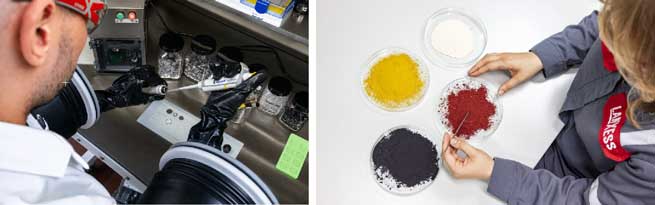
The laboratory enables the company to test the material properties of its products directly in battery cells. This allows LANXESS and its customers to more quickly assess the impact of iron oxide and iron phosphate grades on cell performance, processability, and suitability for specific applications.
The laboratory’s technical equipment is also suitable for other types of batteries, such as sodium-ion batteries, which use sodium iron pyrophosphate as their cathode material.
“Today, cell manufacturers consider more than just raw material availability. What matters is the reliability of processing and its contribution to cell performance,” says Murat Gürsoy, Head of Innovation for Iron Oxides and Iron Phosphate at LANXESS.
“This is precisely where our laboratory comes in. We bring material development and cell testing closer together. This gives us an earlier indication of whether a material works in a real cell assembly.”
LFP Market Is Growing Rapidly
The market for LFP batteries is growing rapidly worldwide. In China, three-quarters of all electric vehicles already use this type of battery. In Europe, management consultancy Roland Berger forecasts an LFP market share of 50% by 2030, up from 10% today.
In addition to electric vehicles, demand for LFP materials is being driven by stationary energy storage systems for renewable energy, data centers, and critical infrastructure. At the same time, new value chains are emerging in Europe and North America to reduce dependency on Asian suppliers.
Market Leader in the Western World
LANXESS is the leading Western manufacturer of iron oxide and has over 100 years of experience producing it. Building on this expertise, LANXESS has developed specialized grades of iron oxide that can be used as raw materials in the synthesis of LFP cathode materials. These so-called "battery grades" are specifically tailored to the needs of battery manufacturers and are already on the market. LANXESS received the 2024 ICIS Innovation Award in the “Best Product Innovation from a Large Company” category for this development.
Additionally, LANXESS has developed iron phosphate as another LFP battery precursor. This process uses iron and phosphoric acid, offering environmental advantages over traditional methods that produce large volumes of saline wastewater.
Broad Portfolio of Solutions for Battery Technology
In addition to precursors for LFP cathode materials, LANXESS offers key chemicals for electrolyte salts.
Lewatit ion-exchange resins are used to process and purify battery raw materials. For example, they are used to extract and refine lithium, nickel, and cobalt.
LANXESS also offers solutions for battery safety and thermal management, including synthetic coolants for high-voltage applications, flame-retardant solutions for plastics and electrolytes, and colorants for safety-critical orange high-voltage components.
For recycling, LANXESS supplies process chemicals and ion-exchange resins for processing black mass, recovering metals, and treating wastewater.
These solutions support key requirements of the battery industry along the entire value chain, from a reliable supply of raw materials and efficient processing to performance, cell protection, and the recovery of valuable metals at the end of the battery’s life cycle.
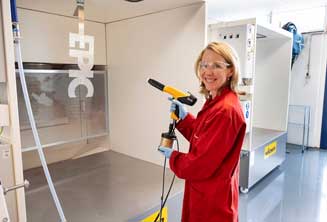
In other news, Netherlands-based Akzonobel has a new EUR7.5 million innovation lab at its Sassenheim site in the Netherlands, strengthening the company’s largest global R&D centre.
Officially opened by Dutch Minister of Climate and Green Growth, Stientje van Veldhoven, the facility – primarily focused on powder coatings – will help to accelerate the development of more sustainable, solvent-free and energy-efficient coating solutions.
“We’ve established a global reputation for pioneering product innovation and the new lab will be pivotal in ensuring that we continue to innovate with impact,” said Frank Vergeer, R&D Director of AkzoNobel’s Powder Coatings business.
“As well as strengthening our leadership in powder coating technologies, this investment will also expand the company’s wider innovation capabilities in coating performance, application and advanced particle analysis.”
The new lab will mainly focus on accelerating the development of next generation powder coatings – including lower temperature curing technologies that can further reduce energy use – as well as solutions that will support customer productivity improvements. In-depth research will also be carried out to identify new opportunities, such as helping to extend product lifetimes, and reduce maintenance and material use.
By developing these solutions, AkzoNobel will enhance its ability to cut carbon emissions across the value chain. The company says it has already reduced CO2 emissions in its own operations (Scopes 1 and 2, baseline 2018) by 50% – four years ahead of schedule.
AkzoNobel employs around 2,700 R&D professionals worldwide across 70 laboratories and has invested more than EUR1.3 billion in R&D over the last five years.
Subscribe to Get the Latest Updates from IMA Please click here




(Browse news archives)



©2026 Injection Moulding Asia. All rights reserved.