2026 - 2027 Exhibitions
Electrical/Electronics: Rewiring smart manufacturing and AI infrastructure
Recent developments in manufacturing, automation, energy and AI chart the electrical/electronic sector gaining place in the wider industrial ecosystem, according to Angelica Buan in this article.
The electrical/electronics sector is entering an unprecedented phase of industrial growth. It is no longer confined to domestic appliances and personal consumer products. It is now heavily entrenched in factory robots, automated inspection equipment, power systems, cooling infrastructure and connected devices, while also providing the hardware and control systems needed for artificial intelligence (AI).
Backbone of manufacturing reliability
As electronic assemblies become more complex, manufacturers need both reliable protection for components and more automated ways to test finished assemblies.
As such, German multinational company Henkel and European electronics manufacturing services (EMS) provider Scanfil are heeding these requirements through different manufacturing technologies.

Henkel has expanded its Technomelt low-pressure moulding Technomelt PA 6370, a polyamide-based hot melt designed for electronic systems with small gaps. Its ultra-low melt viscosity enables filling of gaps as small as 0.5 mm while providing resistance to moisture, heat, corrosion and other environmental conditions.
The material has a melt viscosity of 2,700–3,000 mPa·s at 210°C and 1,065–1,180 mPa·s at 240°C, with good penetration, wetting and adhesion across several substrates. It passed lap shear testing after 1,200 hours at 85°C and 85% relative humidity.
The company positions the material as an alternative to conventional potting encapsulants, with a three-step process and cycle times as short as 30 seconds compared with potting processes that can require up to eight steps and 24 hours. The material also provides electrical insulation, meets UL 94 V-0 flame-retardancy requirements, has a coefficient of thermal expansion of 175 ppm and operates from -20°C to 140°C. Applications include motors, connectors, sensors and printed circuit boards, particularly electronic assemblies exposed to demanding outdoor conditions.
Henkel has also recently launched Loctite Ablestik CDF900, its next-generation conductive die attach film (cDAF) series. The material delivers thermal conductivity exceeding 8 W/m-K and is designed to help semiconductor manufacturers address thermal and stress challenges in AI, 5G, emerging 6G telecommunications and high-performance computing (HPC) applications.
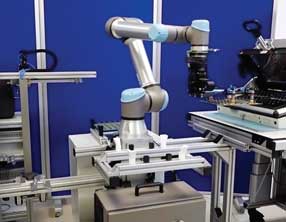
Meanwhile, Scanfil is applying automation to the testing stage of electronics production. Its Wutha facility in Germany has installed a fully automated test cell combining a collaborative robot (cobot), electronic testing and process control. The cobot takes panels from a magazine, loads them into a test fixture and starts the test cycle, with results sent to the cell controller for automatic sorting. Defective boards are identified, marked and sent to a rework magazine, while approved boards are transferred to another magazine. The system can operate for extended periods with limited operator involvement, with personnel mainly loading and unloading magazines.
Scanfil, which has 16 production facilities and serves the aerospace and defense, energy and cleantech, industrial, and medical technology markets, describes the setup as a foundation for a “black shift,” where testing and sorting can continue without direct operator involvement.
Powering cooling and energy systems
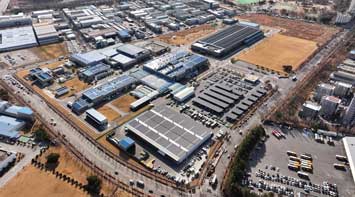
AI computing requires substantial physical infrastructure, from thermal management to electricity generation and transmission. Filling the requirements in this segment, South Korean consumer electronics manufacturer Samsung Electronics and Samsung company specialiing in air technology FläktGroup are expanding cooling capacity.
Samsung plans to invest about US$158 million in a 21,500- sq m HVAC production line at its Gwangju site in South Korea. Scheduled to begin operations in 2028, the facility will manufacture FläktGroup HVAC products, including cooling systems for AI data centres.
Samsung acquired FläktGroup in 2025 as part of its expansion into HVAC. The Gwangju facility will become FläktGroup’s 15th manufacturing site worldwide, following its existing network of 14 facilities and the recent expansion of its manufacturing footprint through Project Gagan, a new production line in Pune, India.
The companies are targeting industrial HVAC demand in South Korea, with AI data centres among the applications driving demand.
Meanwhile, the expansion of electronics-intensive industries is also driving demand for additional power infrastructure.
US private investment firm Arlington Capital Partners has acquired nuclear engineering company Enercon from funds managed by US global asset management firm Oaktree Capital Management. As part of the transaction, Enercon will merge with Arlington’s Pond & Company, a full-service design and engineering firm providing technical services to the federal government and customers across the energy industry. The new company will operate under the Enercon name and is expected not only to broaden market access but also to cater to growing energy demand from AI, manufacturing and other large industrial applications.
The merger brings Enercon’s nuclear and power engineering capabilities together with Pond’s experience in federal energy, natural gas and mission-critical infrastructure. Management teams from both companies have invested more than US$100 million in the combined business alongside Arlington.
AI and automation in electronics production
AI is also being integrated directly into manufacturing equipment and production planning, allowing factories to combine robotics, simulation and automated inspection.
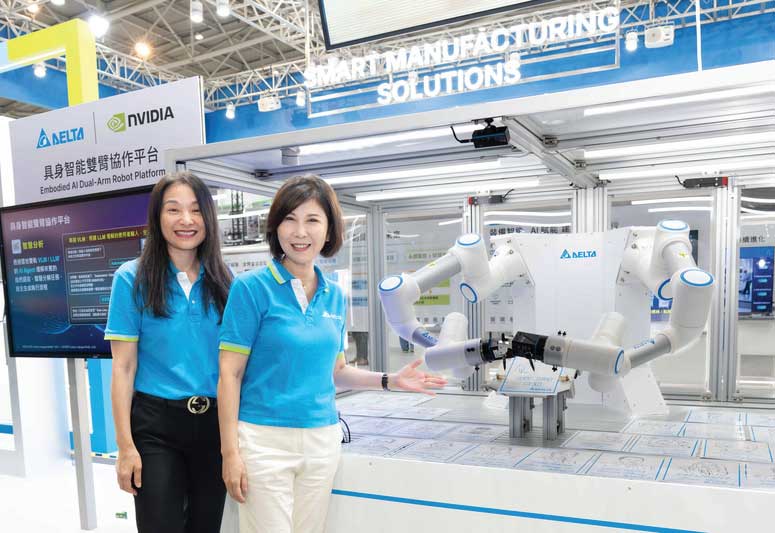
Taiwanese electronics manufacturing firm Delta Electronics is applying these technologies in electronics, semiconductor and machinery production.
Delta’s Embodied AI Dual-Arm Robot Platform combines AI models with robotic control, allowing robots to learn tasks, analyse workflows, execute actions and make corrections using multimodal data. The system is being developed for applications ranging from flexible, high-mix production to AI server assembly. Its AI Robotic Control Platform uses the NVIDIA Jetson AGX Orin module, providing up to 275 TOPS of AI performance, together with NVIDIA Isaac ROS Nvblox and cuMotion for real-time 3D modelling and obstacle avoidance.
For production planning, Delta’s AI-enhanced digital twin combines its DIATwin Virtual Machine Development Platform with NVIDIA Omniverse libraries to simulate processes such as PCB glue dispensing, generate production paths and convert verified results into machine recipes. The system has been deployed at Delta’s Thailand plant for AI server power-supply production lines.
Delta is also using NVIDIA’s Defect Image Generation skill, powered by NVIDIA Cosmos, with NVIDIA TAO and NVIDIA Isaac Sim to generate defect patterns and surface textures for automated optical inspection. The company, which also supplies power components to Apple and Tesla, says this reduced preparation time for models covering new product defects from three months to two weeks and increased AOI rates by 17%.
Subscribe to Get the Latest Updates from IMA Please click here










©2026 Injection Moulding Asia. All rights reserved.