
2026 - 2027 Exhibitions
Expansions: Tokuyama/Lotte to build semiconductor materials plant in South Korea; Evonik opens membrane tech centre in Shanghai
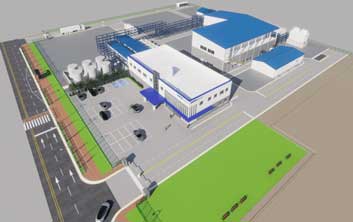
Japan'sTokuyama Corporation announced that Hantok Chemicals, a joint venture company with South Korea’s Lotte Chemical, recently held a groundbreaking ceremony in Pyeongtaek for its new plant, which will be a new production facility for tetramethylammonium hydroxide (TMAH), a photoresist developer for the semiconductor industry.
Hantok has manufactured and sold photoresist in Ulsan since 1995. With demand for advanced semiconductors continuing to grow, demand for TMAH used in semiconductor manufacturing processes is also expected to increase further. Hantok aims to increase its current TMAH production capacity by 50% in the future. This expansion will reinforce its stable supply structure for customers and further strengthen its presence in the global market, it adds.
The company said it will invest a total of 130 billion won to build semiconductor developer production facilities on a site of about 32,216 sq m site.
TMAH is a core material used in the development process that forms fine circuit patterns during semiconductor and display manufacturing. In particular, high-purity semiconductor developer can only be produced in Korea, Taiwan, Japan, and the US.
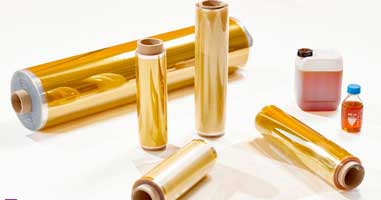
Meanwhile in other news, German chemical firm Evonik’s Innovation Factory has opened an Anion Exchange Membrane (AEM) application technology centre to test its Duraion membranes in real-world operating conditions.
The Evonik AEM Centre Shanghai is the company’s first such facility in the region. Its core mission will be to test and optimise the integration of the membranes, which are manufactured at commercial scale in Marl, Germany, under real-life operating conditions to ensure they meet the specific needs of local customers.
“With the establishment of the Evonik AEM Center Shanghai, we are significantly strengthening our ability to address the rapidly growing hydrogen-applications market in China - and also beyond,” says Jack Zhang, Vice President and General Manager Asia Pacific, High Performance Polymers business line. “Being close to customers and partners allows us to better align our AEM technology with market needs, accelerate adoption, and scale up hydrogen solutions for commercialisation worldwide.”
The site will also function as a collaborative hub where the Innovation Factory’s local experts and area partners can work to address technological challenges across the entire AEM electrolysis value chain.
The AEM centre’s specialised laboratories feature demonstration-scale electrolysis testing capabilities. These include advanced electrolyser test benches to assess the performance and long-term durability of the membranes under actual operating conditions. Overall, these facilities will support the full validation pathway — from single-cell testing to demonstration-scale systems — enabling the industrial application of membranes in AEM electrolysis.
Anion Exchange Membrane electrolysis is a process that can generate green hydrogen from water. Compared to other hydrogen electrolysis solutions, it offers great flexibility in power supply and has lower investment costs due to the use of less expensive materials.
Subscribe to Get the Latest Updates from IMA Please click here








©2026 Injection Moulding Asia. All rights reserved.