2026 - 2027 Exhibitions
PET recycling: Infinite Loop to build plant at BASF site in Germany; Reju selects French site for third plant
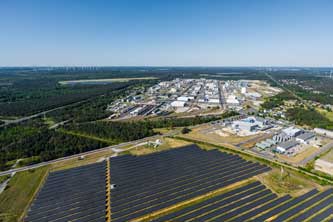
Reed - Societe Generale Group, the majority stakeholder of Infinite Loop Europe, has announced the selection of German chemical firm BASF’s Schwarzheide site in Germany for the development of the first European recycling facility operated by Infinite Loop Europe. This is a milestone in the company's ambition to build a large scale PET & polyester fibres recycling facility in Europe. The site operator is BASF InfraService & Solutions Lausitz GmbH.
The project will use Loop Industries' proven depolymerisation technology, already demonstrated at the Terrebonne plant in Canada. The Germany-based site is expected to produce 70,000 tonnes/year and create 150 direct skilled jobs, with launch targeted for 2030. Infinite Loop Europe invests a triple digit million amount in this recycling facility.
The facility will benefit from BASF's integrated industrial infrastructure and service portfolio on site.
Infinite Loop Europe's plant will recycle both post-consumer PET and polyester fibres, and produce virgin-equivalent quality recycled material suitable for the most demanding applications such as textiles (for instance white curtains) and food-grade and pharma-grade packaging. The recycled material will be available at a competitive price.
The facility will enable to recycle post-consumer no or low-value waste that is currently incinerated or landfilled while delivering significant environmental benefits. The process avoids up to 5 tonnes of CO2 emissions for every tonne of recycled PET, while directly supporting the transition from fossil-based feedstocks for the European chemical industry. The project is an important step towards a European circular economy.
The development of the project is supported by Reed - Societe Generale Group, through its Reed Circular Economy platform, dedicated to accelerating the deployment of large-scale innovative technology for Europe circular infrastructure.
This takes place in a context where the European Commission acts to support the PET recycling industry. In December 2025, the European Commission announced a set of new pilot actions aimed at creating common EU-wide rules for the plastics recycling, forming part of a series of measures to revitalise the plastics recycling sector.
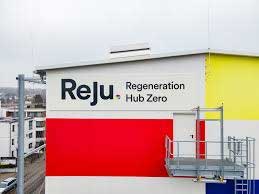
Meanwhile in other news, Reju, a textile-to-textile materials regeneration company owned by French energy infrastructure company Technip Energies, has announced plans to build an industrial-sized PET textile recycling plant in Lacq, Southwest France.
Reju has already announced plans for plants in the Netherlands and the US. Final investment decisions are pending for the three plants, each targeting around 50,000 tonnes/year of recycled polyester, with a cost at least twice that of virgin polyester.
Backed by Technip Energies’ global engineering expertise, Reju says it will bring cutting edge textile to textile regeneration technology to French industry. The plant will utilise Reju’s proprietary depolymerisation technology to take post-consumer textiles from national waste streams as feedstock and to transform them into rBHET, a regenerated raw material for making new polyester from textile waste, that will then be repolymerised into Reju PET.
The project is subject to final investment decision by the board of Technip Energies, the parent company of Reju.
This project confirms France’s position as a pioneer in this strategic sector and will help structure a new local industry, contributing to decarbonisation. It would generate 80 direct jobs and more than 300 indirect jobs.
The project aligns with Reju’s established operations, including Regeneration Hub Zero in Frankfurt, the announced site selection in Chemelot, Sittard-Geleen the Netherlands and the recently announced US hub to be located in Eastman Business Park, in Rochester, New York.
As well, Reju’s first Rgeneration Hub One will be built in the Chemelot Industrial Park in Sittard-Geleen, the Netherlands. The project marks the next step for Reju in scaling up PET recovery from polyester fabrics after the launch of a pilot hub in Frankfurt in October last year.
Reju CEO Frisk, who previously led sportswear brand Under Armour, speaking at the company's pilot factory in Frankfurt that the price premium was justified, adding that material accounts for only a small percentage of a garment's total cost.
Reju plans investments between EUR300 million and 400 million per site.
Currently, 98% of recycled polyester is made from plastic bottles, according to Textile Exchange, drawing criticism for diverting plastic bottles from an established recycling loop.
The price of recycled materials, and whether retailers try to charge a premium for products made from them, will be key factors in a fiercely competitive fashion industry, according to a Reuters report.
Subscribe to Get the Latest Updates from IMA Please click here




(Browse news archives)

©2026 Injection Moulding Asia. All rights reserved.