2026 - 2027 Exhibitions
Expansions: Kumho Mitsui Chemicals to increase capacity of MDI; Toppan to install pilot line for semicon packaging

Japanese firm Mitsui Chemicals announced that its affiliate Kumho Mitsui Chemicals Inc. (Seoul, South Korea) has decided to further increase the capacity of its production facilities for methylene diphenyl diisocyanate (MDI). The capacity increase will be 100,000 tonnes/year taking the current capacity from 610,000 to 710,000 tonnes/year. Construction is expected to start in February 2026 and end in May 2027.
MDI is a key raw material for polyurethane, widely used in automotive parts, furniture and bedding, insulation for homes and refrigerators, elastic fibres, and various adhesives. Demand for MDI is projected to grow at an annual rate of 5% going forward on account of policy measures around the globe to improve residential insulation as a means of global warming suppression, as well as due to the heightened demand accompanying economic growth.
Kumho Mitsui Chemicals manufactures and sells high-performance monomeric, modified, and high-viscosity polymeric types of MDI used for making auto parts, elastic fibres, and highly flame-retardant insulation materials, as well as commodity polymeric MDI used for making housing and home appliance insulation.
The facility is already operating at full capacity following a 200,000-tonne capacity increase in 2024. With this new capacity increase, Kumho Mitsui Chemicals will be able to accommodate growing demand for not only automotive materials, but also the high-performance MDI used in flame-retardant insulation materials.
Furthermore, this move will make full use of the recycling facilities introduced during the previous 200,000-tonne capacity increase, reducing GHG emissions per unit of MDI produced.
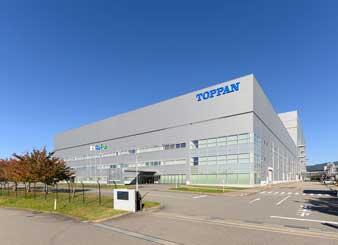
In other news, Japan’s Toppan Inc. says it will install a pilot line to conduct R&D of advanced semiconductor packaging at the Ishikawa plant acquired in 2023, aiming to commission the line in July 2026. This will include organic redistribution layer (RDL) interposer development to be conducted on the pilot line.
In the area of advanced semiconductors used for applications such as generative AI and autonomous driving, packaging substrates are being scaled up and chiplet structures are being adopted to achieve higher densities.
Chiplet structures require intermediate substrates called interposers2 to connect chips to packaging substrates. Silicon interposers are currently the predominant type, but due to challenges in scaling up, the industry is looking toward the establishment of interposer technology based on large glass substrates as an alternative to silicon.
Utilising the new pilot line, Toppan adds it will verify technologies for future mass production by pursuing R&D on components required for advanced semiconductor packaging, such as interposers using large glass substrates as well as glass cores and organic RDL interposers.
The project selected by NEDO aims to simultaneously achieve low power consumption and high-capacity data transfer by developing submicron interconnect fabrication technologies for organic RDL interposers.
Toppan furthers that it will advance the development of technologies and materials in collaboration with Osaka Metropolitan University, Toyama Prefectural University, Shinshu University, the Institute of Science Tokyo, and the National Institute of Advanced Industrial Science and Technology.
Subscribe to Get the Latest Updates from IMA Please click here





(Browse news archives)




©2025 Injection Moulding Asia. All rights reserved.